
Your Pipeline Is 14.5h Behind: Catching Regulation Sentiment Leads with Pulsebit
We recently uncovered a significant anomaly: a 24h momentum spike of -0.400 related to the topic of regulation. This drop indicates a noteworthy shift in sentiment and suggests that there's a story brewing that we need to pay attention to. What's particularly interesting is that the English press is leading the narrative 14.5 hours ahead of the Spanish coverage, which indicates a critical timing gap in how we process multilingual data.

English coverage led by 14.5 hours. Spanish at T+14.5h. Confidence scores: English 0.85, French 0.85, Spanish 0.85 Source: Pulsebit /sentiment_by_lang.
If you’re not equipped to handle multilingual origins or the dominance of certain entities, you might find your models lagging behind. Your model missed this by 14.5 hours, which is a significant delay in today’s fast-paced environment. The leading language here is English, but the emerging sentiment is rooted in regulatory scrutiny of H-1B contracting firms, a topic that could have wide-reaching implications.
To catch this sentiment shift in real-time, we can leverage our API effectively. Here's how we can set up a Python script to identify these critical spikes.
import requests
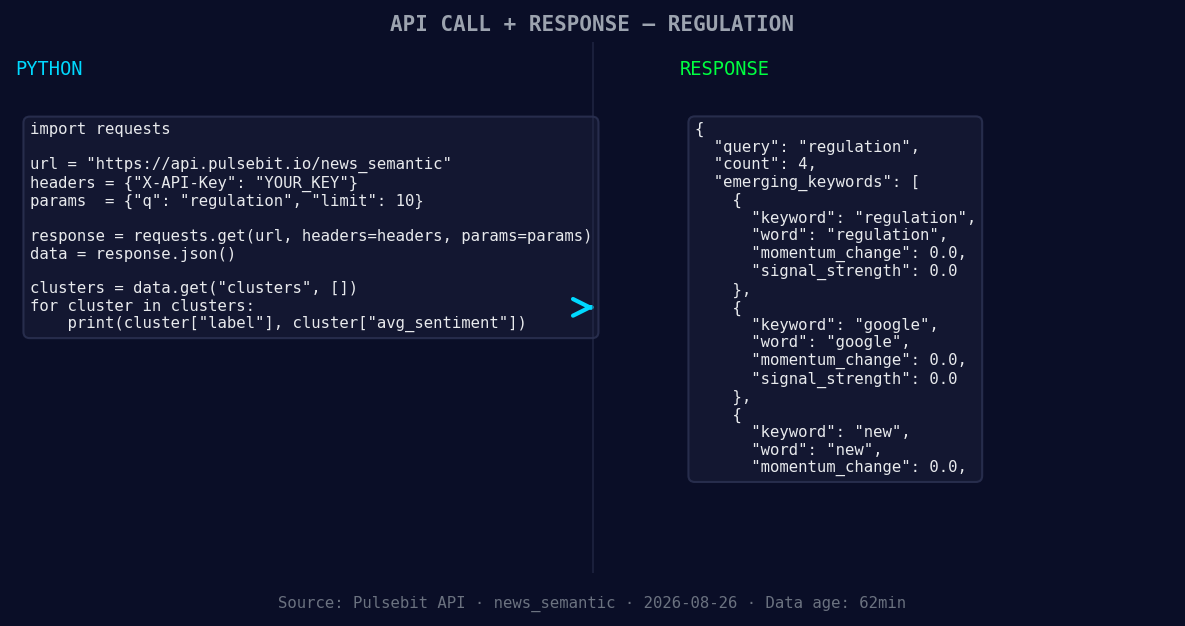
*Left: Python GET /news_semantic call for 'regulation'. Right: returned JSON response structure (clusters: 3). Source: Pulsebit /news_semantic.*
# Step 1: Geographic origin filter
url = "https://api.pulsebit.lojenterprise.com/v1/articles"
params = {
"topic": "regulation",
"lang": "en",
"score": 0.000,
"confidence": 0.85,
"momentum": -0.400
}
response = requests.get(url, params=params)
data = response.json()
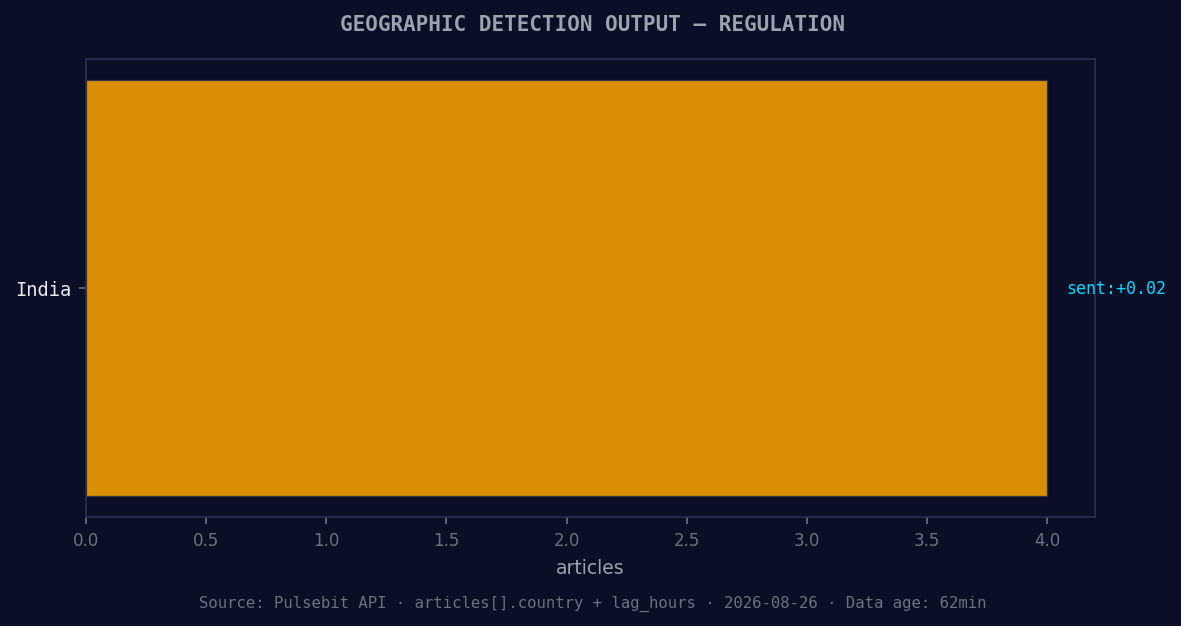
*Geographic detection output for regulation. India leads with 4 articles and sentiment +0.02. Source: Pulsebit /news_recent geographic fields.*
# Step 2: Meta-sentiment moment
cluster_reason = "Clustered by shared themes: new, h-1b, contracting, firms, scrutiny."
sentiment_url = "https://api.pulsebit.lojenterprise.com/v1/sentiment"
sentiment_response = requests.post(sentiment_url, json={"text": cluster_reason})
sentiment_data = sentiment_response.json()
print(sentiment_data)
In this code, we first filter articles by the 'regulation' topic in English to catch that 14.5h lead. The second part sends the cluster reason string back through our sentiment endpoint to assess how the narrative frames itself.
Now, let’s explore three specific builds we can implement with this pattern:
Real-time Alert System: Create a webhook that triggers when the momentum drops below -0.300 for articles about 'regulation' in English. This alert can help you stay ahead of critical news.
Meta-Sentiment Analysis Dashboard: Build a dashboard that visualizes sentiment trends over time for the narrative framing around regulatory issues. Use the meta-sentiment loop to generate insights based on the cluster reasons, focusing on the themes of 'new', 'H-1B', and 'contracting'.
Multilingual Comparison Tool: Develop a tool that compares sentiment scores across languages for the same topic. Use the geo filter to assess how sentiment around 'regulation' in English contrasts with other languages—particularly Spanish—to identify potential market disparities.
If you're eager to start leveraging these insights, check out our documentation at pulsebit.lojenterprise.com/docs. You can copy-paste and run this in under 10 minutes to take advantage of this powerful feature.
Just remember, staying ahead of sentiment is not just about data; it's about interpreting it correctly and swiftly.


